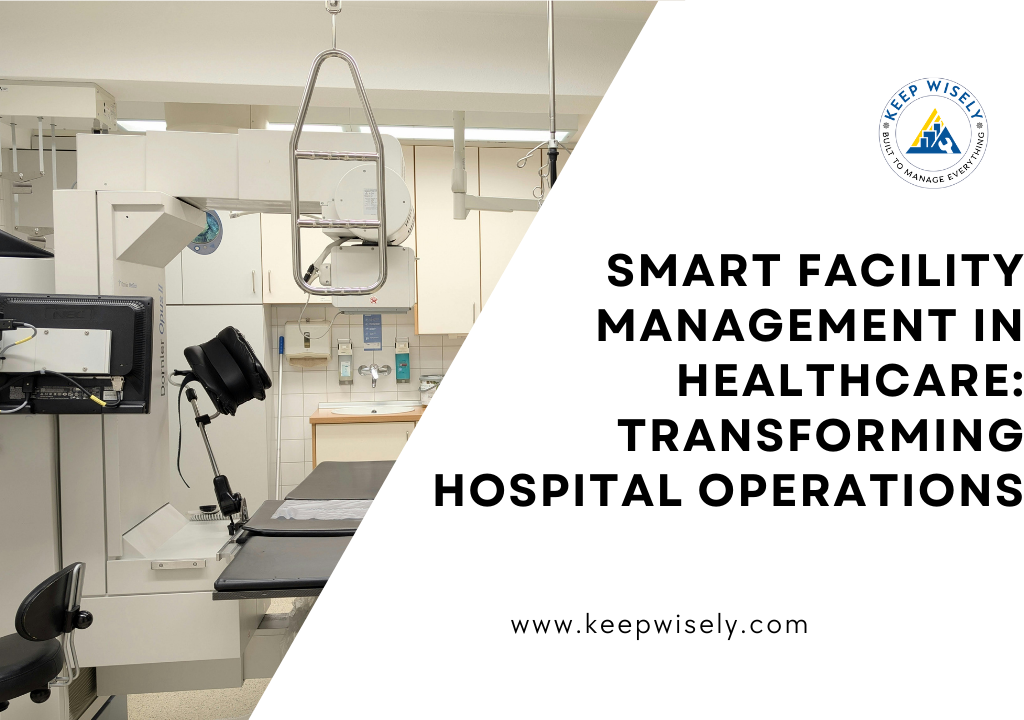
Today, hospitals need to give good care to patients while running smoothly and saving time and money. Smart healthcare facility management is helping hospitals do this by making work easier, saving costs, and keeping all departments connected. Using modern tools like IoT, AI, and automatic monitoring, smart healthcare facility management changes how hospitals work, making them more organized and focused on patients. From keeping machines in good condition to saving energy, this approach helps hospitals work better and gives patients a safer and better experience. Click Here
Understanding Smart Healthcare Facility Management :
Smart healthcare facility management is about using modern technology to make hospital work easier and take better care of patients. Instead of doing everything by hand, smart hospitals use internet-connected devices, AI, and data to save time, money, and keep things safe. Digital tools help hospitals track equipment, save energy, plan repairs, and make daily work smooth. This makes things better for patients and helps staff do their jobs faster. In short, smart healthcare management makes hospitals run smarter, fix problems faster, and give safer, more efficient care. More Information
The Role of Technology in Smart Facility Management for Hospitals :
1.Hospital IoT Solutions :
Smart healthcare facility management uses IoT (Internet of Things) devices to connect hospital equipment, systems, and staff in real time. These smart hospital solutions help hospitals monitor everything from patient rooms to medical devices, ensuring smoother hospital operations management and better resource use.
2.Automation in Healthcare Facilities:
Automation in hospitals reduces manual work by handling routine tasks such as scheduling, lighting, climate control, and patient notifications. This improves hospital efficiency improvement and allows staff to focus more on patient care, making healthcare maintenance solutions more effective.
3.Hospital Asset Tracking Systems :
Smart asset tracking systems allow hospitals to locate equipment like wheelchairs, ventilators, and diagnostic tools instantly. This saves time, prevents loss, and ensures critical tools are always available, supporting smart healthcare facility management and hospital operations management.
4.Smart Sensors in Hospitals :
Sensors in patient rooms, corridors, and equipment track usage, temperature, humidity, and safety conditions. These smart hospital solutions alert staff about potential issues, improving hospital efficiency improvement and enhancing healthcare maintenance solutions.
5.Real-Time Data Monitoring :
Collecting and analyzing data from multiple sources in real time helps hospitals make faster, informed decisions. This optimizes hospital operations management, reduces downtime, and strengthens smart healthcare facility management for safer, more efficient care .Click Here
Emerging Trends Shaping Smart Hospital Operations :
New technologies are changing how hospitals manage their daily work and buildings. AI-based management tools help hospitals know when machines need repair, use resources properly, and make better decisions using data. Cloud-based healthcare systems allow hospitals to store and access information safely from anywhere, making teamwork easier. Smart building systems connect lights, air conditioning, security, and medical equipment into one system, helping hospitals run smoothly. Remote monitoring and alerts let staff check equipment and building conditions in real time, so they can fix problems quickly and keep the hospital safe and efficient .Click Here
Key Benefits of Smart Facility Management in Healthcare Settings :
- Improved Patient Safety and Care :
Smart facility management enhances patient safety and care by using real-time monitoring, smart sensors, and automated alerts. This ensures that potential risks are detected early, helping staff respond quickly and deliver better healthcare services. - Cost Reduction in Hospitals :
Implementing smart healthcare facility management reduces operational costs by optimizing resource use, automating tasks, and preventing unnecessary expenses. Efficient management of staff, equipment, and supplies leads to significant hospital cost savings. - Energy Efficiency in Healthcare Facilities :
Smart systems control lighting, HVAC, and other utilities, improving energy efficiency in healthcare facilities. This not only lowers energy bills but also supports sustainable practices while maintaining a comfortable environment for patients and staff. - Predictive Maintenance for Medical Equipment
With predictive maintenance, hospitals can monitor equipment health using sensors and data analytics. This prevents unexpected breakdowns, extends the life of critical devices, and ensures uninterrupted patient care an essential aspect of healthcare maintenance solutions.
Overcoming Challenges: Implementing Smart Facility Solutions in Hospitals
Even though smart facility solutions are helpful, hospitals face some difficulties when using them. Cybersecurity is a big concern because connected systems must be kept safe from hacking and data leaks. Hospitals also need to give proper training to staff so they can use new technologies without confusion. Following data privacy rules like HIPAA is important to keep patient information safe and trusted. Another challenge is connecting new systems with old hospital systems, which is not always easy. By handling these problems carefully, hospitals can use smart facility management successfully and improve daily operations.
The Future of Smart Healthcare Facility Management :
- The future of smart healthcare facility management is about making hospitals more eco-friendly, cost-effective, and efficient.
- Sustainable healthcare operations help hospitals save energy, reduce waste, and lower daily expenses while protecting the environment.
- Hospitals are also focusing on patient-centered facility design, where rooms and spaces are designed to be comfortable, safe, and supportive of faster healing for patients and easier work for staff.
- At the same time, future-ready hospital infrastructure upgrades make it easier to add new technologies like AI, automation, and smart monitoring systems.
- These modern upgrades help hospitals run smoothly, fix problems faster, and improve overall patient care.
- In the future, hospitals will become smarter, more connected, and better prepared to meet patient needs quickly and safely.Contact us
Conclusion :
Smart facility management helps hospitals work better by using technologies like IoT, AI, automation, and real-time data. These systems make it easier to manage buildings and equipment, reduce manual work, save energy, and make sure important machines are always working properly. This helps hospitals run smoothly and safely.It also improves patient safety by using smart sensors, automatic alerts, and predictive maintenance to find problems early and fix them quickly. This reduces equipment failures, saves time, lowers costs, and creates a safer, eco-friendly hospital environment.Even though there are challenges like cybersecurity, staff training, data privacy, and old systems, they can be handled with proper planning. Overall, smart facility management is becoming essential for hospitals to provide efficient, safe, and high-quality patient care. Get Free Trail
Frequently Asked Questions
Smart facility management uses technologies like IoT, AI, and automation to manage hospital buildings, equipment, and utilities efficiently. It helps monitor systems in real time and reduces manual effort. This improves safety, performance, and overall hospital operations.
It automates routine tasks such as maintenance, energy monitoring, and equipment tracking. Real-time data helps hospitals respond faster to issues. This leads to smoother workflows and fewer operational disruptions.
Common challenges include cybersecurity risks, staff training needs, and integration with older systems. Data privacy is also a key concern. These challenges can be managed with proper planning and expert support.
Hospitals are becoming more complex and technology-driven. Smart facility management ensures efficient operations, safer environments, and better patient experiences. It is essential for delivering high-quality care in modern healthcare settings.
Smart sensors and automated alerts detect problems early, such as equipment failure or unsafe conditions. This allows quick action before issues affect patients. As a result, hospitals maintain safer and more reliable care environments.